
Introduction
Cold storage facilities operate under different conditions from conventional warehouses. Low temperatures, refrigeration costs, condensation, product handling requirements and stock rotation all influence how the storage area should be designed.
Choosing the right cold storage racking system can help businesses organize inventory while making efficient use of expensive refrigerated space.
The objective is not simply to install as many racks as possible. Storage density must be balanced with accessibility, product movement, refrigeration performance and safe operation.
What Is Cold Storage Racking?
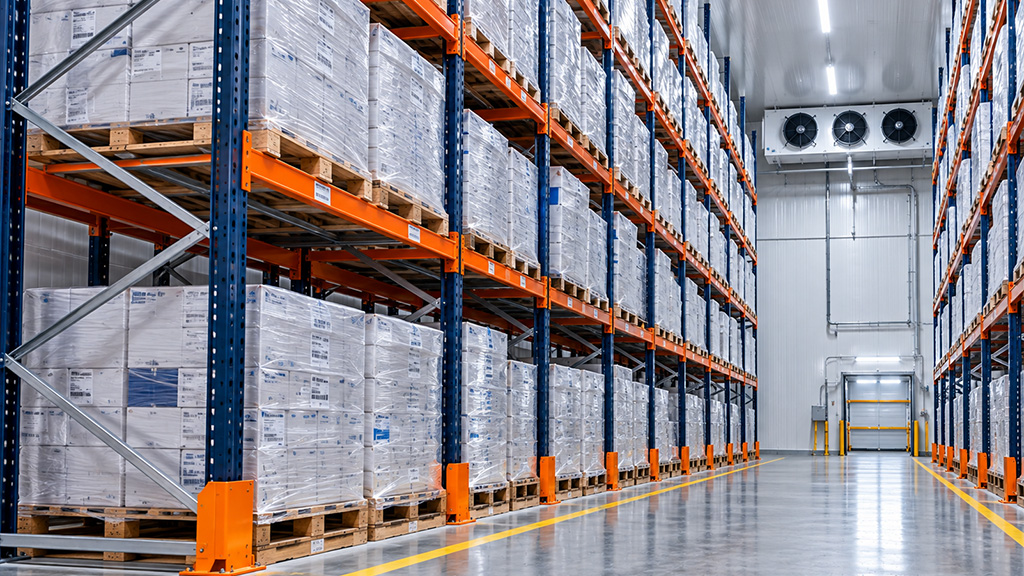
Cold storage racking is a storage system designed for warehouses, chillers or freezers that operate under controlled temperature conditions.
Depending on the inventory and throughput, a facility may use selective pallet racking, drive-in racking, mobile racking, radio shuttle systems or other suitable configurations.
Racks & Rollers offers Temperature-Controlled Warehouse Solutions and multiple industrial racking systems.
Six Factors to Consider
1. Temperature and operating environment
Determine the required operating temperature and the environmental conditions the rack components will experience.
Material specifications and protective finishes should be suitable for the intended environment. Condensation, cleaning practices and moisture exposure should also be considered.
2. Storage density
Refrigerated space is costly to build and operate. Businesses should evaluate whether higher-density storage could improve capacity within the available footprint.
Drive-in or other dense-storage systems may be appropriate for certain inventory profiles. However, a dense configuration is not automatically the most efficient choice for every cold store.
3. Inventory rotation
Consider whether the operation requires FIFO (First In, First Out) or FEFO (First Expiry, First Out).
The inventory policy, product characteristics and software processes should determine the storage and retrieval method.
4. Pallet and load characteristics
Pallet dimensions, load weight, packaging stability and product handling requirements influence rack design.
The rack system must be suitable for the actual loads and operating conditions.
5. Material handling equipment
Forklift type, aisle requirements, lifting height and operating clearances should be considered before the racking layout is finalized.
6. Refrigeration and airflow
Rack placement can affect how air moves through a refrigerated facility. The storage design should be coordinated with refrigeration and building specialists to maintain the required temperature conditions.
Which Racking System Is Suitable?
Selective pallet racking: Useful where direct access to a wide range of SKUs is important.
Drive-in racking: Can suit bulk storage of similar products where high density is a priority.
Mobile pallet racking: May be worth evaluating where high density and selective access are both important, subject to operating requirements.
Radio shuttle racking: Can suit high-density storage and repetitive pallet movements.
Explore the relevant systems through the Racks & Rollers racking portfolio.
Common Cold Storage Design Mistakes
- Choosing a system based only on maximum pallet count.
- Ignoring stock rotation and expiry management.
- Failing to consider condensation and corrosion.
- Overlooking equipment clearances.
- Neglecting maintenance access.
- Designing storage without coordinating with refrigeration requirements.
Conclusion
Cold storage racking requires an integrated approach to storage capacity, temperature management, inventory rotation and material handling.
A suitable design should reflect the products being stored, the required temperature range, throughput and long-term operational needs.
Explore Temperature-Controlled Warehouse Solutions from Racks & Rollers.
Need to plan or upgrade a cold storage facility?
Visit www.racksandrollers.com or email info@racksandrollers.com.
Frequently Asked Questions
Which racking system is best for cold storage?
The answer depends on SKU variety, pallet quantities, stock rotation, temperature and throughput. Selective, drive-in, mobile and shuttle systems may all be suitable for different applications.
Why is storage density important in cold stores?
Refrigerated space requires specialized infrastructure and ongoing energy consumption, so efficient use of available space can be an important design consideration.
Does cold storage racking need special finishes?
The required finish depends on temperature, moisture, cleaning practices and the operating environment. Specifications should be confirmed for the particular application.