Introduction
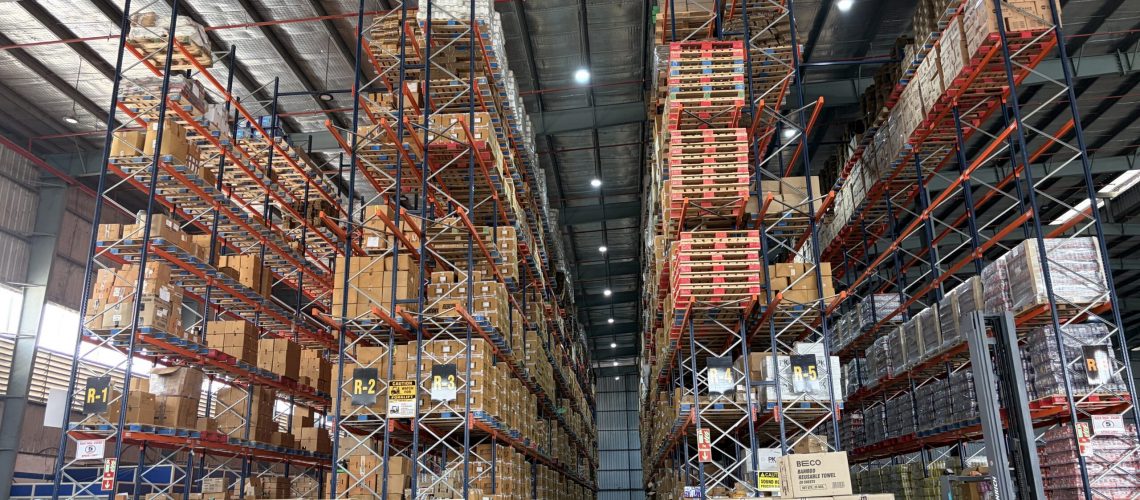
Efficient warehouse storage is one of the most critical aspects of modern supply chain operations. As businesses grow, the demand for organized and high-capacity storage solutions increases significantly. Warehouse racking systems are designed to maximize storage capacity while maintaining accessibility, safety, and operational efficiency.
Companies across industries rely on advanced warehouse racking solutions to optimize vertical space, improve inventory management, and streamline logistics operations.
In this guide, we explore the different types of warehouse racking systems and how they help businesses improve storage efficiency.
What Are Warehouse Racking Systems?
Warehouse racking systems are structured storage solutions designed to store materials, pallets, and inventory within a warehouse environment. These systems use vertical space effectively, allowing businesses to store more goods without expanding their physical facility.
Modern racking systems are engineered to handle heavy loads, improve organization, and enhance warehouse productivity.
Types of Warehouse Racking Systems
Selective Pallet Racking
Selective pallet racking is the most common storage solution used in warehouses. It provides direct access to every pallet and is highly flexible.
Benefits include:
- Easy inventory access
- Simple installation
- Cost-effective storage solution
Drive-In Racking
Drive-in racking systems allow forklifts to enter the rack structure, enabling high-density storage. This system is commonly used for:
- Cold storage facilities
- High volume pallet storage
- FIFO or LIFO inventory management
Push-Back Racking
Push-back racking systems allow pallets to be stored on inclined rails. As new pallets are loaded, previously stored pallets move backward. Advantages include:
- High storage density
- Improved warehouse productivity
- Reduced aisle requirements
Radio Shuttle Racking
Radio Shuttle Racking system is ideal for warehouses that require efficient pallet handling with minimal manual intervention. Benefits include:
- High storage density
- Reduced forklift travel time
- Improved warehouse automation and efficiency
- Suitable for cold storage and high-volume warehouses
Cantilever Racking
Unlike traditional pallet racks, cantilever racks use horizontal arms extending from vertical columns, allowing easy loading and unloading. Benefits include:
- Ideal for long and oversized materials
- Easy forklift access
- Flexible storage configuration
- Improved warehouse space utilization
Pallet Flow Racking
Pallet Flow Racking Systems supports First-In-First-Out (FIFO) inventory management and is widely used in industries where product rotation is important. Benefits include:
- Perfect for FIFO inventory systems
- Improved picking efficiency
- Reduced forklift traffic in aisles
- High storage density with better stock rotation
Mobile Pallet Racking
Mobile Pallet Racking systems significantly increases storage capacity within the same warehouse footprint. Benefits include:
- Maximum warehouse space utilization
- Reduced number of aisles
- Ideal for cold storage warehouses
- Enhanced inventory security
Benefits of Warehouse Racking Systems
Maximizing Vertical Storage
Warehouse racking systems allow businesses to utilize vertical warehouse space efficiently, significantly increasing storage capacity.
Improved Inventory Management
Organized racking layouts allow businesses to track inventory more accurately and reduce retrieval time.
Increased Operational Efficiency
A well-structured warehouse layout improves workflow and reduces operational bottlenecks.
Industries That Use Warehouse Racking Systems
Warehouse racking solutions are widely used across industries such as:
- Manufacturing
- Automotive spare parts
- E-commerce distribution
- FMCG logistics
- Pharmaceutical warehouses
How to Choose the Right Racking System
When selecting warehouse racking systems, businesses must consider factors such as:
- warehouse layout
- product size and weight
- Inventory turnover rate
- storage density requirements
A professional warehouse assessment helps identify the most suitable storage solution.
Conclusion
Warehouse racking systems play a crucial role in modern supply chain operations. By maximizing vertical storage space and improving warehouse organization, these systems help businesses improve productivity and operational efficiency.
Companies looking to upgrade their warehouse storage infrastructure should consider professional racking solutions tailored to their specific operational requirements.
Looking for warehouse storage solutions?
Racks & Rollers provides customized industrial storage systems designed to maximize warehouse efficiency and optimize space utilization.
🌐 www.racksandrollers.com | 📧 info@racksandrollers.com | 📞 +91 9019113355